Your Neck Isn't Healing — Because Your Pillow Is Making It Worse Every Night
You've tried the stretches. The chiropractor visits. The pillow after pillow from Amazon. The pain keeps coming back — because the damage is being reinforced for 6–8 hours every night while you sleep.
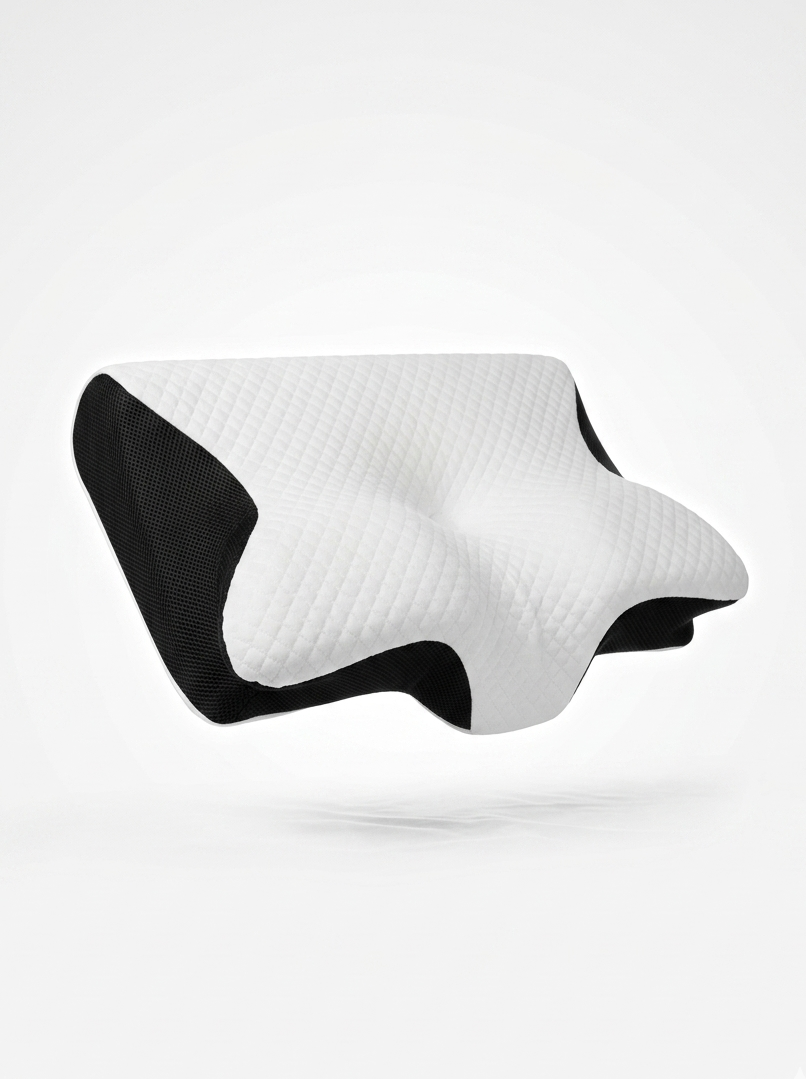

You've Tried Everything. Here's Why Nothing Stuck.
The stretches, the chiropractor visits, the $40 pillow from Amazon that went flat in two weeks. You're not failing. The problem just isn't where you think it is.
Most people with tech neck spend their days trying to fix the problem — chin tucks, posture reminders, expensive chiropractic adjustments. And they feel slightly better for a few hours. Then it comes back.
The reason has nothing to do with effort. It's because the 6–8 hours you spend unconscious every night — when your body is supposed to heal — are actually making the problem worse.
-
Morning stiffness that shouldn't exist
You wake up feeling worse than when you went to sleep. Sleep is supposed to relieve it. Instead it locks in the damage.
-
A dull ache that builds through the day
By mid-afternoon your shoulders are tight, your head feels heavy, and nothing makes it fully go away.
-
Everything you try only works temporarily
Stretches help. Heat helps. But the effect always returns because you haven't fixed the environment where the real damage happens.
-
Your pillow is actively working against you
Standard pillows — even "orthopedic" ones — weren't designed for spinal correction. They were designed for comfort. There's a difference.

The Real Damage Isn't Happening During the Day
Your daily habits contribute. But it's the 8 hours you spend with your neck unsupported every night that locks the damage in — and undoes everything you do during the day.
Hours of looking down at screens gradually pulls your head forward. The natural inward curve of your cervical spine begins to flatten — this is tech neck forming.
Traditional pillows — even memory foam ones — aren't shaped to support the cervical spine's natural curve. They cradle your head. They don't correct your neck. So the misalignment you built up during the day gets reinforced for 8 more hours.
Prolonged misalignment leads to muscle shortening, disc compression, and postural changes that become harder to reverse. That's why the pain keeps returning — and why it feels like it's getting worse, not better.
During sleep, your muscles fully relax and your body enters its natural repair mode. This is when the cervical spine can passively decompress — if it's given the right positional support. Most people never give it that support.
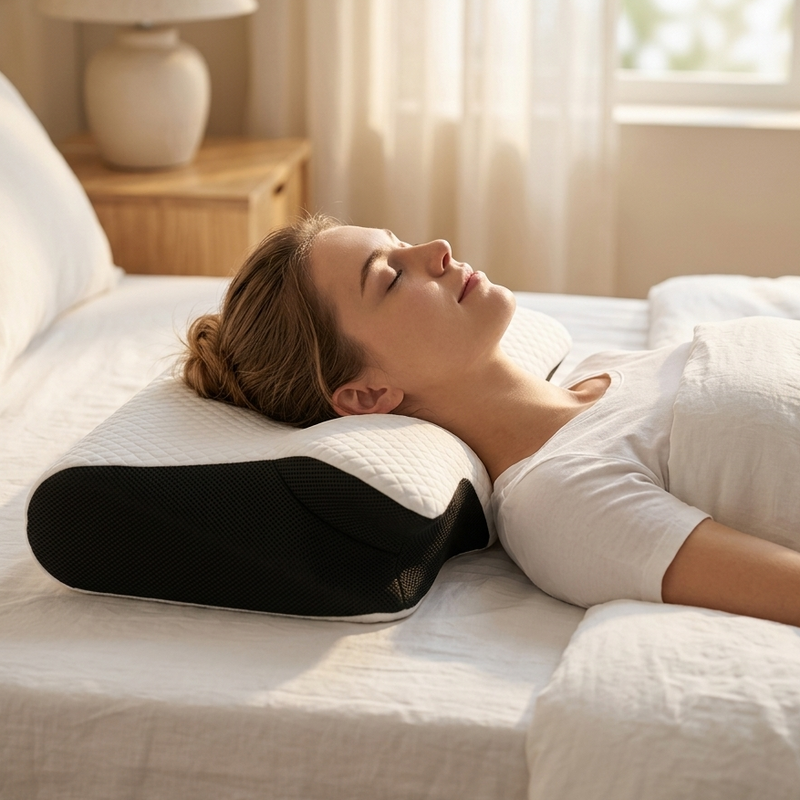
A Cervical Pillow Built for Correction — Not Just Comfort
Engineered on orthopedic alignment principles to restore your natural cervical curve while you sleep. No routines. No effort. Just give your body the right environment — and let it do what it's already trying to do.
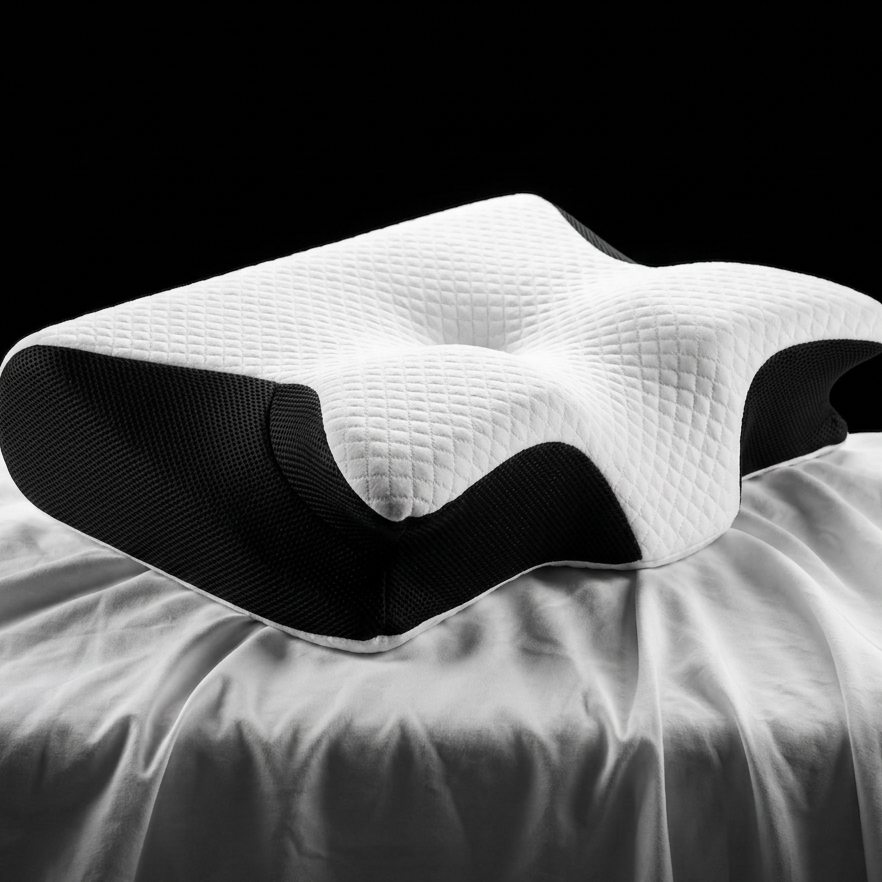
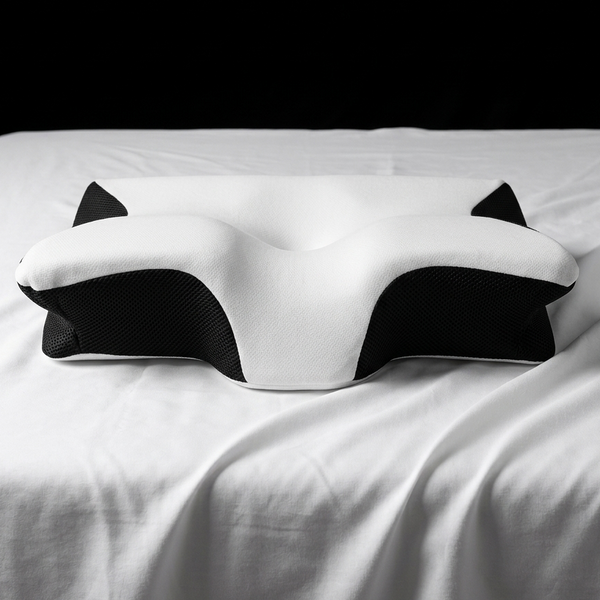
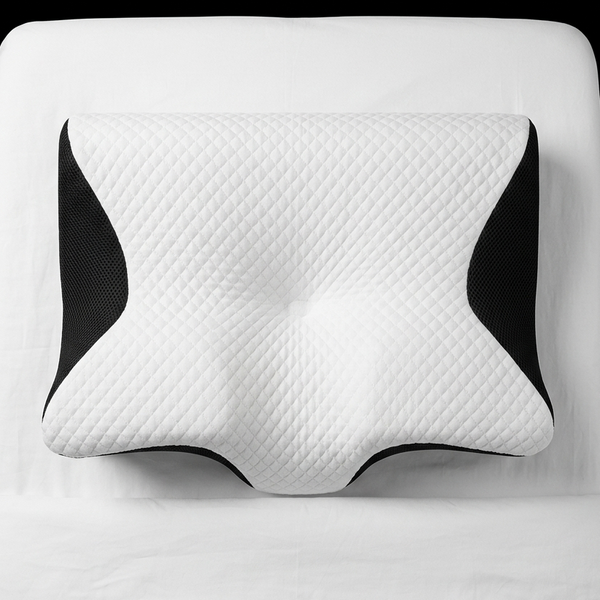
Lower centre for back sleeping. Raised sides for side sleeping. One pillow, both positions.
Holds its shape all night. Still supportive at 3am — when your body does its deepest recovery.
Removable, machine-washable cover with breathable cooling fabric. Stays fresh night after night.
Shaped to cradle the back of the skull while supporting the natural lordotic curve of the neck.
Free shipping on all orders
Four Things Happening While You Sleep
No effort required. No routines to maintain. The pillow does the work during the hours when your body is already trying to recover.
Maintains the Cervical Curve
Instead of letting your head sink and your neck flatten, the contoured support holds your spine in its natural lordotic arc throughout the night.
Adapts to Sleep Position
The dual-zone design provides different support profiles for back and side sleeping — so alignment is correct regardless of how you shift through the night.
Resists Overnight Compression
High-density foam holds its structural integrity all night — so the support you have when you fall asleep is still there during your deepest, most restorative sleep cycles.
Promotes Passive Realignment
Night after night, correct positional support allows shortened muscles and stressed ligaments to gradually return toward their natural state — without you having to do anything.
A note on the first few nights: If you've been sleeping on a flat pillow for years, the first 1–2 weeks may feel different as your muscles adjust to proper support. This is normal. It's your body adapting to the position it should have been in all along.
Built Around How Your Cervical Spine Actually Works

Dual-Zone Architecture
Most pillows have one loft height. Your neck doesn't work that way. NeckRestore™ uses a lower-profile center zone that cradles back sleepers without pushing the head forward, and a raised contoured zone on each side for side sleepers — filling the gap between shoulder and ear to keep the spine straight.
- Lower center zone for neutral back sleeping
- Raised side zones matched to shoulder gap
- No one-size-fits-nobody compromise

High-Density Memory Foam
Budget memory foam compresses quickly and loses its shape within hours — leaving you unsupported for most of the night. NeckRestore™ uses high-density foam that maintains its contour through an 8-hour sleep cycle. It conforms to your shape without bottoming out, and springs back to its original profile every morning.
- Holds contour all night — doesn't flatten by 3am
- Springs back to shape each morning
- Consistent support from hour one to hour eight

Breathable Cooling Cover
Memory foam retains heat. Sleeping hot disrupts sleep cycles, which undermines the very recovery you're trying to achieve. NeckRestore™ comes with a removable, machine-washable cooling cover that draws heat away from the surface — keeping the sleep environment comfortable without compromising the foam's support properties.
- Breathable fabric layer over the foam
- Fully removable and machine washable
- Helps maintain sleep temperature
Not All Cervical Pillows Are Created Equal
95% of pillows on Amazon come from the same factory. Here's what makes NeckRestore™ different.
| Feature | NeckRestore™ Best Choice | Regular Pillow | Other Cervical Pillows |
|---|---|---|---|
| Maintains natural cervical curve | |||
| Prevents nightly spinal collapse | |||
| Adjustable height insert | |||
| Hollow cervical cradle design | |||
| Cooling removable cover | |||
| Works for side & back sleepers | |||
| CertiPUR-US certified foam | |||
| Get NeckRestore™ |
If Any of These Sound Like You, Keep Reading
Desk Workers & Remote Employees
Spending 6–10 hours in front of a screen compresses your cervical spine all day. By bedtime, your neck is already in distress — and the wrong pillow locks that position in overnight.
Gamers & Content Creators
Late-night sessions in the same head-forward position add up fast. NeckRestore™ is designed to counteract the "gamer hunch" by restoring your cervical curve while you sleep.
Students & Heavy Readers
Hours of looking down at textbooks, laptops, and phones strain the same muscles every single day. Proper overnight support gives those muscles a real chance to decompress.
Writers & Creative Professionals
If your work keeps your neck in a fixed position for hours, you need your sleep to undo that — not continue it. A supportive pillow is the only recovery tool that works while you're unconscious.
Anyone Who Wakes Up Stiff
Morning stiffness that fades after an hour or two is your body telling you something happened overnight. It's not age. It's not inevitable. It's usually a support problem — and it's solvable.
People Who've Tried Everything
Chiropractors, foam rollers, stretching routines — they help, but they can't fix what 7–8 hours of wrong positioning does every night. NeckRestore™ works while you sleep, not instead of those things.
Honest Answers to Real Concerns
Most "orthopedic" pillows are marketing labels on standard foam. The key difference with NeckRestore™ is the dual-zone design — a lower loft zone for back sleeping and a higher contoured zone for side sleeping. Most pillows pick one height and call it done. If a pillow didn't change anything for you, it likely wasn't actually matching your cervical curve — it was just firmer than what you had before.
Chronic tension doesn't mean permanent damage in most cases — it means the contributing factors haven't been removed. Sleep position is one of the most consistent, nightly contributors to neck strain. Removing it doesn't undo years overnight, but it stops the cycle of re-injury while you sleep. Most users notice a difference within the first 1–2 weeks. If you have a diagnosed structural condition, consult your physician — a pillow isn't a medical treatment.
Yes — side sleepers are actually the primary design case. When you sleep on your side, the gap between your shoulder and your head is significant. A pillow that's too flat drops your head toward the mattress; one that's too high pushes it toward the ceiling. NeckRestore™ is contoured to fill that gap and keep your spine neutral. Back sleepers benefit from the lower-loft center zone, which supports the natural cervical curve without pushing the head forward.
There's an honest adjustment period of 1–2 weeks. Your muscles have adapted to your old sleep position, and switching to proper support can feel unfamiliar at first — sometimes even slightly uncomfortable. This is normal. Most users report noticeable improvement in morning stiffness and neck tension within the first two weeks of consistent use.
Standard memory foam contours to pressure, but it doesn't have a defined shape designed for cervical alignment. NeckRestore™ uses high-density foam (not low-cost budget foam) that holds its contour throughout the night — it won't flatten to a slab by 3am. The orthopedic wave profile is designed specifically to support the cervical curve, not just cushion whatever position you happen to land in.
Stop Waking Up Stiff. Start Sleeping Like Your Body Actually Recovered.
Every night on the wrong pillow is another night your neck can't heal. NeckRestore™ is designed to work while you sleep — no routines, no appointments, no effort.
Free shipping on all orders.